
The short answer
Check one complete sale with the real staff role and equipment you intend to use. Verify the saved receipt, payment and stock change in a dedicated test workspace before processing customer transactions.
Use a dedicated test workspace first
A completed checkout creates real sale, payment and stock records. Inventix does not provide a guarantee that a practice sale is excluded from your live reports. Use a separate test workspace while learning the workflow.
Prepare one recognisable product
Create a product with a known code, price, standard cost and starting quantity. Choose the intended store and check its taxes before opening POS.
Set up the store and add the product.
Test the entire counter flow
- Sign in with the staff account that will use the counter.
- Open a register and scan the product once.
- Check that the intended item and quantity appear.
- Record a cash payment and inspect the receipt.
- Find the sale and payment in the reports and confirm the stock change.
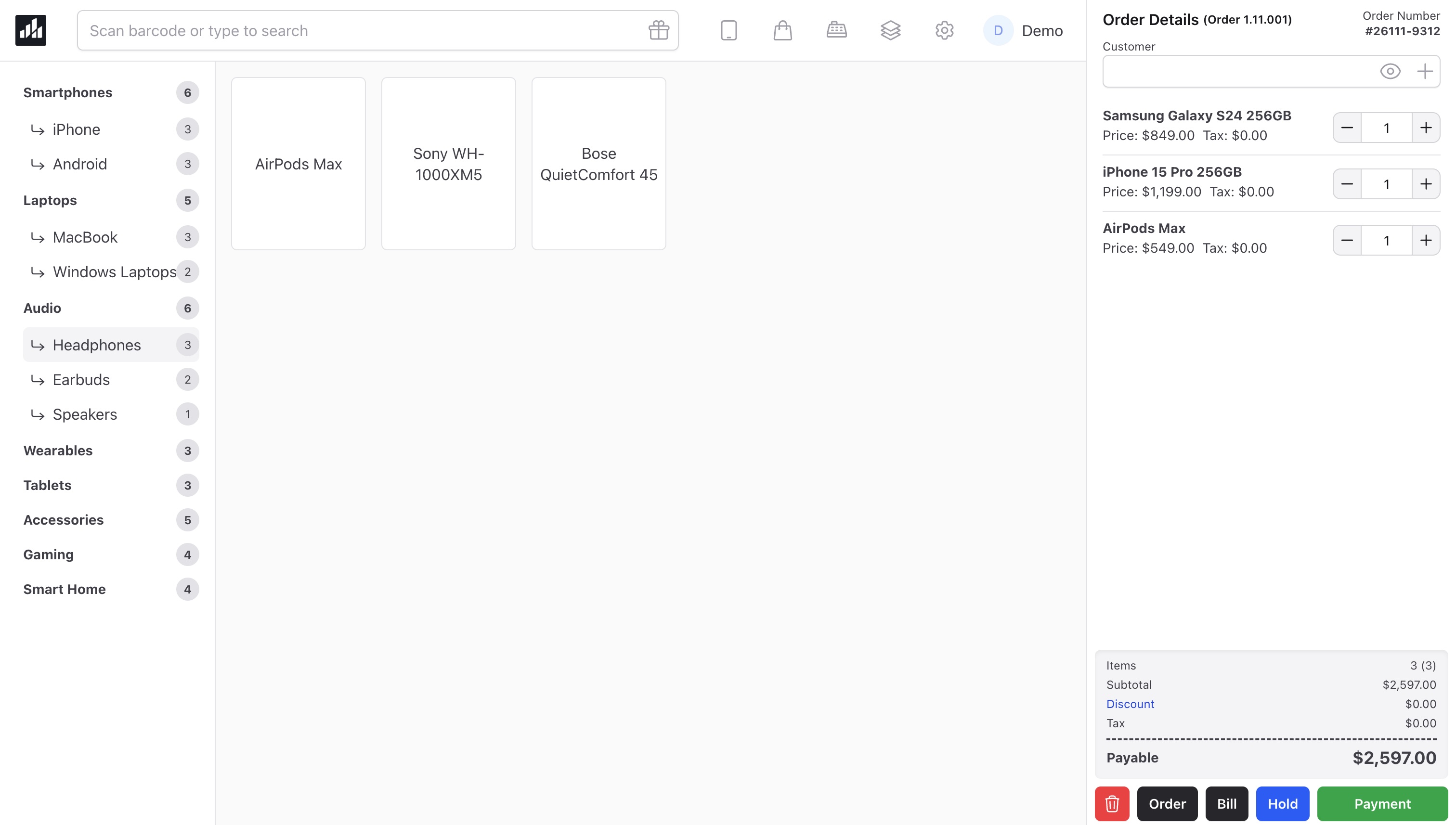
Test equipment rather than assuming compatibility
Print on your actual receipt paper and scan a label made by your actual printer. Check scanner terminators, browser print settings and any local device bridge. Device support must be established for your equipment; a browser print dialog alone is not proof that a drawer or printer works.
Keep terminal payments separate
A manually recorded card payment in Inventix does not charge a card. Test your external terminal through its own approved process and reconcile its reference with the sale. Do not confuse shop payments with Lemon Squeezy subscription billing.
Know the interruption procedure
Offline sales and later automatic replay are disabled. Staff should pause and reconcile the saved record after a connection problem, not repeatedly submit checkout.
Keep the connection-recovery guide available.
Check the ordinary exceptions too
Try a held cart, a permitted discount and a partial payment where your workflow allows one. Recall the held cart and review its prices again before completion. Select a customer and check whether a customer/group price changes the total.
Use the actual staff role: an owner account can hide missing permissions that the cashier will encounter. Test access to the assigned store and confirm the staff member cannot reach a restricted location or action. Set up staff permissions.
For an illustrative cash sale of one $16 item with $20 tendered and no extra tax, check the $16 sale total, $4 change and one-unit stock reduction. Reconcile the saved payment record and register result rather than treating tendered cash as extra sales revenue.
Start simple, then add equipment deliberately
Start with the device you already have. No expensive POS terminal is required to begin using the software, but taking card payments still needs an appropriate payment provider and compatible equipment.
A phone, tablet and computer can use the same web workspace. Check that the screen fits, the connection is reliable, and the person operating it can find products without another person explaining every step. Native mobile apps remain coming soon.
Make the first workflow easy to repeat: correct store, correct product, checked total, actual payment, saved receipt. Review daily reporting before the real opening day and pricing before choosing monthly or annual billing.